You're accountable for the build.
Nobody's shown you their working. I will.
A written verdict in five days, a finished build in twelve weeks, or the certificate a contract is waiting on — from a hands-on fractional CTO who writes the code, and who can stay on afterwards.
Ten years from pre-seed to national-scale platforms, on both sides of the Atlantic — embedded as a senior technical voice, not a deck of strategy slides.
- Product · Engineering · Delivery
- Pre-seed → Series A
- Remote-first · on site when it matters

- 10+
- Years building and leading engineering teams
- 1–2 days
- A week embedded in your team — not an advisory retainer
- 0 → 1
- Prototype to production, more than once
- 7 sectors
- AI, manufacturing, fintech, government, space and more — the failure patterns repeat.
Everyone who can tell you the truth
about your build is selling you something.
Most founders don't need a full-time CTO yet. They're making CTO-level decisions every week regardless.
Someone else set the date. Someone else wrote the quote, the contract, or the status update. You are the one who signs, and nobody independent has read it — so the first honest signal usually arrives after the money is spent.
It works in the room and falls over everywhere else. What closed the meeting now has to survive real customers, real data, and an investor who will look under it.
Procurement has sent the security questionnaire, or the tender makes Cyber Essentials a condition of bidding. The deal does not move until someone hands over a certificate — not a readiness report.

I run your engineering team, not a slide deck about it.
I join the standup, own the roadmap, sit in the sprint reviews and write code in the same repo as everyone else. Your engineers get a technical leader who can answer the hard question in the moment — and your investors get someone who can defend the architecture in a diligence call.
That means the team keeps shipping while the strategy gets fixed, rather than pausing for a three-month consulting exercise that ends in a document nobody implements.
A four-step engagement — designed to de-risk every week.

30-minute call. We scope the problem, stage, and fit. No pitch — just an honest read on whether I can help. Getting it checked before you sign is the cheapest thing you will do all quarter.
A fixed fee and a fixed window — five days against the date you booked it for, or up to three weeks depending on the door you came in. It ends in a document, and the document is yours to take anywhere, including to someone else.
The seat, the build, or the certification — whichever the document argued for. Always in your own cloud accounts, your own repos, under your own domain.
Every engagement ends with a named owner on your side and the handover done in writing. If that owner is a hire rather than me, the report says so.
Product judgement. Engineering depth.
From ambiguous problems to reviewable decisions and working software. My product thinking, delivery choices and engineering contributions.
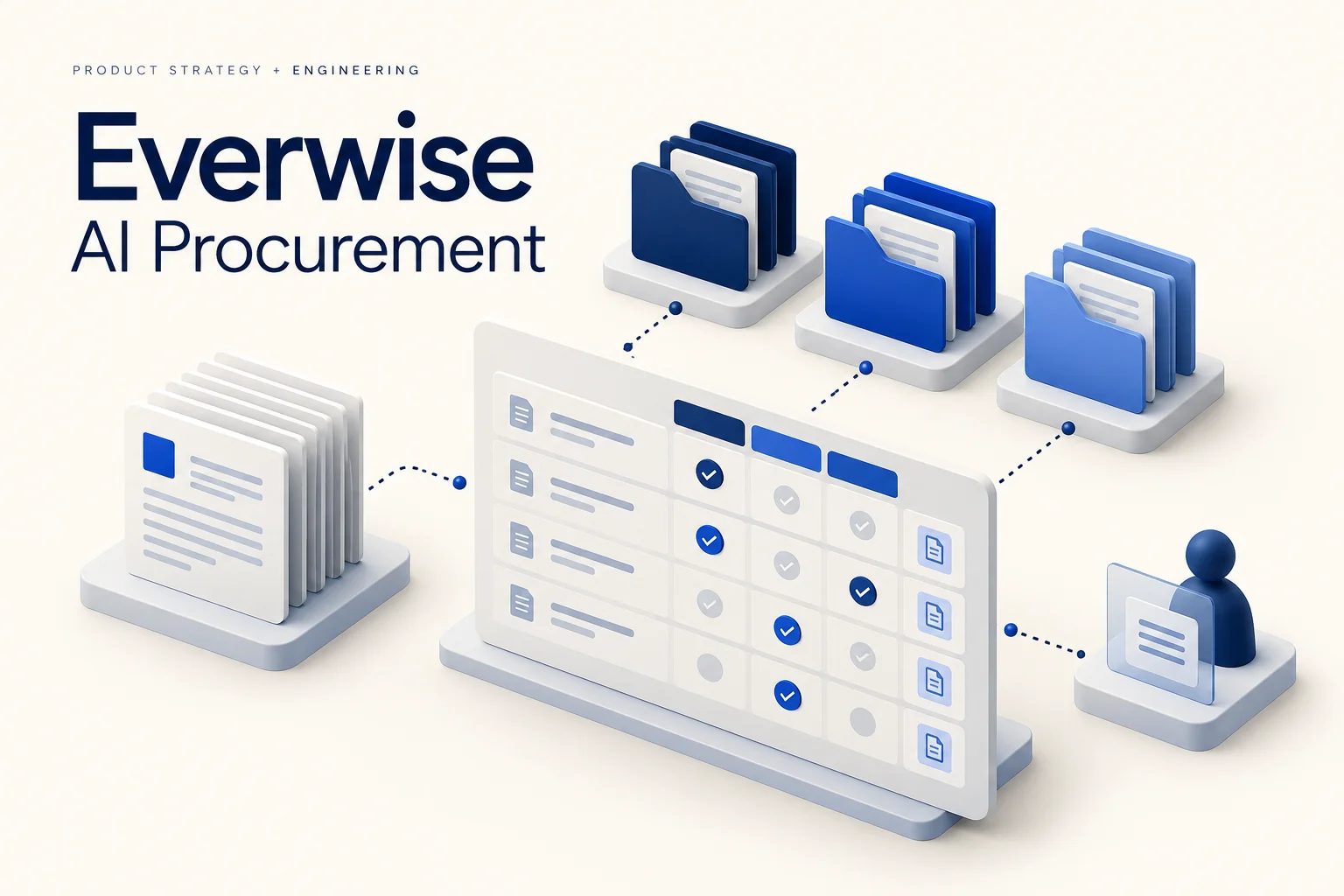
Everwise: AI Procurement Platform
Led discovery, product definition and engineering for an AI procurement platform, translating buyer and supplier needs into 39 feature specifications and evidence-linked bid evaluation.

Medical Device Manufacturer: Supply Chain Allocation MVP
Turned supply-chain rules into explainable allocation recommendations, built planner validation tools, and contributed AI-assisted process discovery.
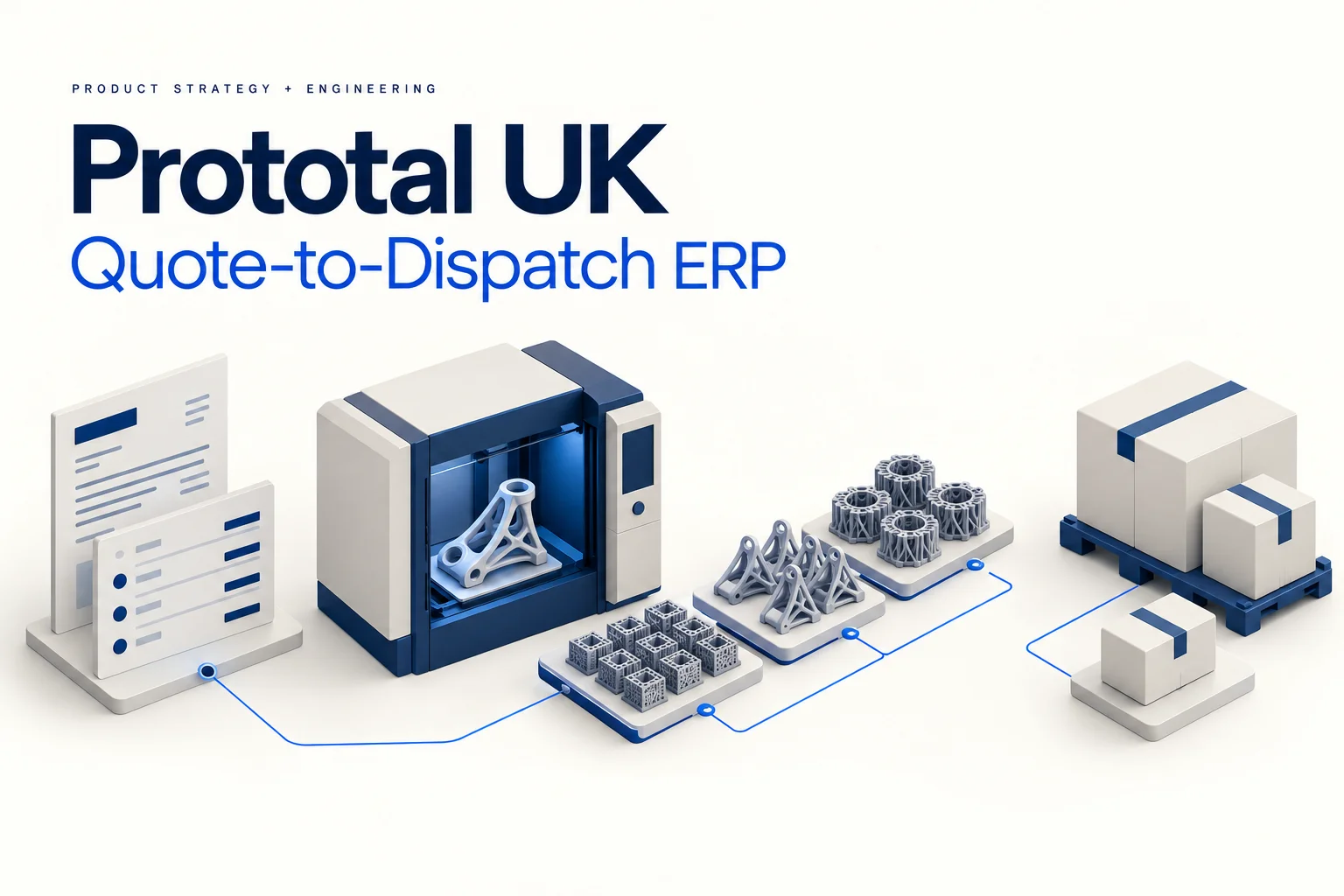
Prototal UK: Quote-to-Dispatch ERP
Defined and delivered an ERP from scratch, from automated quotes to dispatch across nine industrial machines worth £2M+, and established the client's software department.

A remote practice — on site when it earns the trip.
Day to day the work runs in your Slack, your repos and your cloud accounts, on a standing call — the same way your engineers already work. None of it depends on being in the same city.
I'm based in London, which matters less as an address than as a clock. My mornings reach Asia and the Gulf; my afternoons cover the US East Coast and run into the West Coast morning. If your founders and your engineers sit in different halves of the world, I can be in a working session with both on the same day.
And I travel. Kickoffs, architecture workshops, board meetings, hiring loops, the first week with a new team — the moments where a room genuinely beats a call.
In their words.
“I had a founder-built prototype, a pre-seed conversation weeks away, and nobody technical who could answer for either of them. Mayur told me straight what my architecture could and couldn't carry, and why — then took it to production, hired our three founding engineers and sat on the investor calls as the technical counterparty. We rebranded mid-raise and closed the round.”
Not a startup? I'm the specialist for the hard problem.
Larger companies and Fortune 500 enterprises bring me in on a specific, high-stakes problem — an explainable supply-chain optimisation engine for a global manufacturer, a 10-language corporate platform for a public company. Deep in software engineering, data engineering, and AI/ML — hands-on, and accountable for shipping the thing that actually works.
Everything else you'd want to check first.
3 deep ways to plug in — Fractional CTO leadership, full-stack/data/AI production engineering, and security & compliance certification. All delivered hands-on.
What a Fractional CTO actually does, engagement models, and how to decide between fractional and full-time.
Ten years from pre-seed startups to the UK government's transformation programme — the background, sectors, and full experience timeline.
The questions to ask before you sign.
Twelve questions to put to an agency, a supplier or your own team before you commit money to a build — and, for each one, what a real answer sounds like next to an answer that is avoiding you. Written for the person who signs it off and can't personally check it.
You're subscribing to The Founder's Tech Brief — a fortnightly plain-English briefing for founders. The twelve questions open straight away. Unsubscribe any time. How your data is handled.
A build you can't evaluate, a demo that has to ship, or a certificate a contract is waiting on.
Book a 30-minute discovery call. If we're not a fit, I'll tell you on the call — and point you toward someone who is.