Future Works: AI Agent Platform
Platform development · Product & engineering contributor
AI agents / enterprise software
Helped turn agent capability into a more dependable working experience, fixing interaction failures and defining a production path tied to customer needs and commercial milestones.
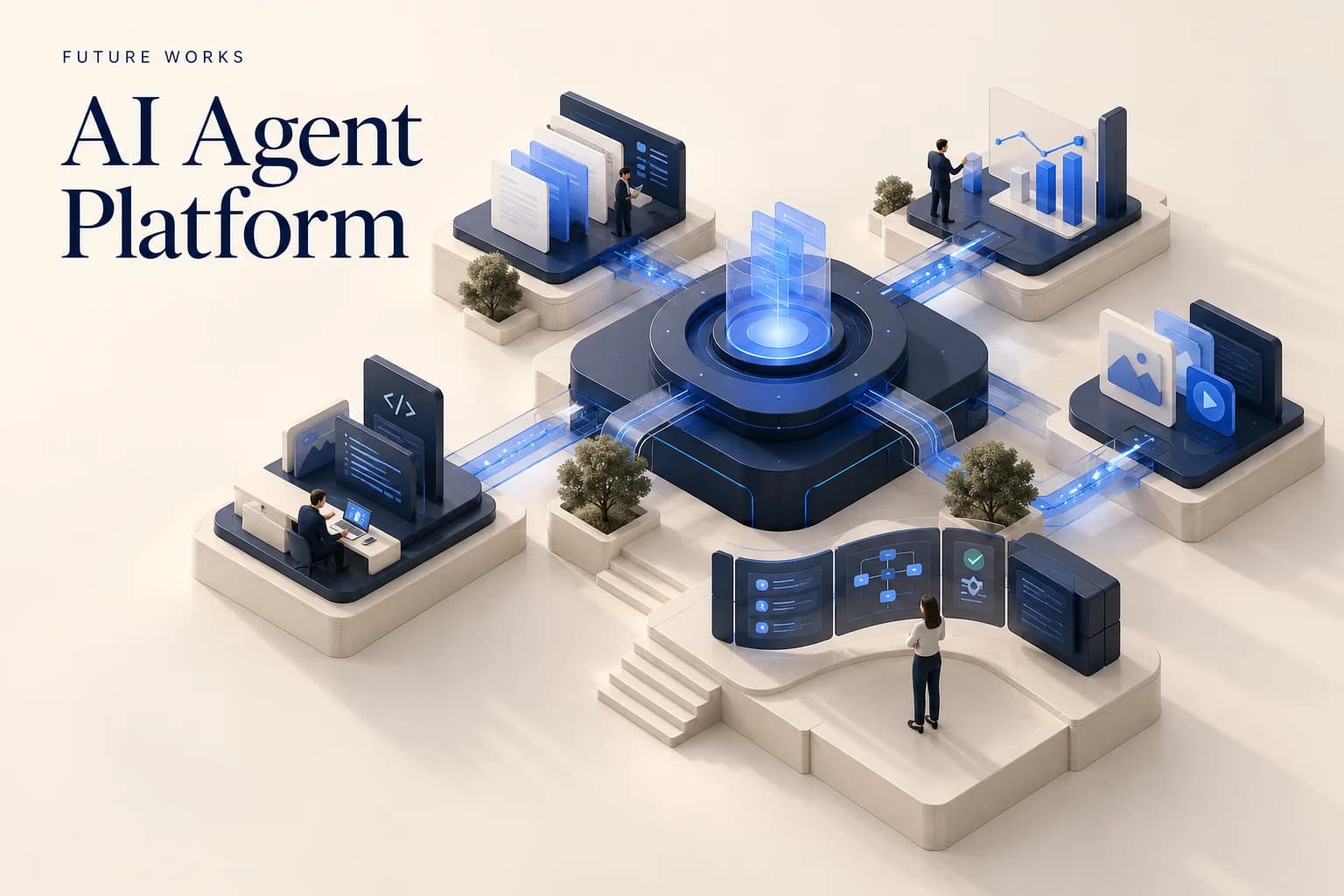
Concept illustration
Future Works was developing an AI agent platform for tool-connected work. I contributed to the existing platform alongside its engineering team, with work across the chat experience, session reliability, connected accounts and architecture reviews.
The experience could break down around ordinary actions: retrying a message, sending work during an active turn, attaching a file or choosing a model before a session started. At the same time, the team needed a credible production architecture without committing to infrastructure costs ahead of demand.
Solution
- Addressed failures in the core user journey
Delivered fixes for duplicate-message handling, retryable concurrency conflicts, queued messages and attachments during active turns, and model selection before the first turn. Focused the work on users being able to continue a task reliably.
- Made connected-account behaviour more trustworthy
Verified OAuth grants through live refresh and removed tokens and authorisation URLs from chat transcripts. Treated connection state and secret handling as part of the product experience.
- Reviewed the platform as a product investment
Produced four architecture reviews covering the application, identity, model gateway and target production design. Connected technical choices to customer isolation, operating cost and the path to a deployable service.
- Defined a phased AWS target architecture
Costed a proposed production design and compared identity and model-routing options. Prioritised low-cost security improvements and made larger infrastructure commitments conditional on customer or revenue triggers.
- Supported controlled runtime releases
Contributed to canary-and-promote runtime releases so changes could be checked before wider rollout. Combined interaction fixes with a more deliberate delivery process.
Trade-offs I'd defend
An agent needs to handle retries, attachments and session state consistently. I focused contributions on these foundations so additional tools would sit on a more dependable user journey.
Designed a phased AWS target rather than treating the entire target state as an immediate build commitment. The AWS work was architecture and costing, with spend deferred to explicit commercial triggers.
Outcomes
More case studies
Led discovery, product definition and engineering for an AI procurement platform, translating buyer and supplier needs into 39 feature specifications and evidence-linked bid evaluation.
Turned supply-chain rules into explainable allocation recommendations, built planner validation tools, and contributed AI-assisted process discovery.
Defined and delivered an ERP from scratch, from automated quotes to dispatch across nine industrial machines worth £2M+, and established the client's software department.
Clarified 37 assigned requirements for a manufacturing-services delivery platform and established an isolated AWS development environment for stakeholder QA.
Corporate + investor-relations website — CMS-driven, internationalized across 10 locales, with 3D/WebGL brand experiences.
A build you can't evaluate, a demo that has to ship, or a certificate a contract is waiting on.
Book a 30-minute discovery call. If we're not a fit, I'll tell you on the call — and point you toward someone who is.